

PgMP vs PMP: Which Certification is Right For You (2026 Guide)
If you’re considering a career in project management or are already managing projects, you’ve likely encountered two of the most respected certifications in the field: PgMP vs PMP. The Project Management Professional (PMP) certification is one of the most globally recognized qualifications in project management, while the Program Management Professional (PgMP) certification is a more advanced credential for those with experience in managing multiple interconnected projects.
Both certifications are offered by the Project Management Institute (PMI), and understanding the key differences between PgMP and PMP is essential to determining which certification will better serve your career goals. Whether you’re a beginner looking to enter the field or a seasoned professional wanting to move into higher-level roles, this guide will help you understand which certification suits your professional aspirations and will provide the necessary details to help you prepare for each exam.
PgMP vs PMP – Key Differences
Understanding the differences between PgMP vs PMP is critical to making the right choice for your career. Both certifications focus on different aspects of project management, so it’s important to understand where each one fits into the project management landscape.
1. Scope of Focus: Project vs. Program Management
One of the most significant differences between PgMP and PMP is the scope of focus.
- PMP is geared toward professionals who manage individual projects. This certification is ideal for those who are focused on leading projects from initiation through to closure, ensuring that the projects meet their objectives, are completed on time, and stay within budget.
- PgMP, on the other hand, is focused on program management, which involves managing multiple related projects as part of a larger program that aligns with an organization’s strategic goals. If you’re looking to manage multiple projects simultaneously and ensure their success at a program level, PgMP will be the certification that enhances your ability to lead strategically.
2. Level of Responsibility: Tactical vs. Strategic
The level of responsibility associated with each certification varies significantly:
- PMP holders usually focus on the tactical aspects of project management. They are primarily responsible for ensuring that a single project runs smoothly and efficiently, managing resources, risks, stakeholders, and schedules.
- PgMP holders, in contrast, have a more strategic role. They manage a collection of related projects that contribute to a larger organizational goal or vision. They are responsible for coordinating the projects, making sure they align with the organization’s long-term strategies, and overseeing the successful integration of these projects.
3. Experience Requirements: Entry-Level vs. Advanced
Another notable difference is the experience required to earn each certification.
- PMP: To qualify for the PMP exam, candidates must have either:
- A high school diploma and at least 5 years of project management experience, or
- A bachelor’s degree and 3 years of project management experience.
- In addition, you must complete 35 hours of formal project management education. These relatively more accessible experience requirements make PMP the perfect starting point for aspiring project managers.
- PgMP: The PgMP certification, however, requires more advanced experience. Candidates need:
- A bachelor’s degree and 4 years of program management experience, or
- A secondary diploma and 6 years of program management experience.
- Additionally, you must complete 35 hours of formal program management education. PgMP is intended for those who already have substantial experience in managing multiple projects and are ready to take on larger responsibilities in managing programs.
4. Skills and Competencies
The competencies and skills acquired through each certification are designed to address different needs in the field of project management.
- PMP focuses on developing technical project management skills, such as:
- Time, cost, and risk management.
- Quality control and monitoring.
- Project scheduling and resource allocation.
PMP holders are skilled in managing the detailed aspects of a single project, ensuring the project stays on track.
- PgMP, in contrast, emphasizes the strategic management of multiple projects, so PgMP holders develop a different set of skills, including:
- Portfolio management and aligning projects with organizational strategies.
- Stakeholder engagement and managing complex program risks.
- Leading cross-functional teams and ensuring the successful integration of various projects into a cohesive program.
The skills acquired through PgMP are geared toward high-level program management, while PMP is focused on executing a single project successfully.
What is PMP (Project Management Professional)?
The PMP certification is one of the most widely recognized certifications in the project management field. It demonstrates that you have the skills and experience to manage projects efficiently and effectively. Here’s a closer look at what PMP entails:
What is PMP?
The PMP certification is designed for individuals who manage individual projects. A PMP certified professional demonstrates an in-depth understanding of project management principles, tools, and techniques. This includes everything from initiating and planning projects to executing, monitoring, and closing them.
Eligibility Requirements for PMP
To qualify for the PMP exam, candidates need the following:
-
For candidates with a bachelor’s degree:
- At least 3 years (36 months) of experience leading projects.
- 35 hours of formal project management education.
-
For candidates without a bachelor’s degree:
- At least 5 years (60 months) of project management experience.
- 35 hours of formal project management education.
Exam Overview
The PMP exam consists of 175 scored and 5 pretest un-scored MCQs, drag and drop, and fill in blanks which you must complete within 230 minutes. The cost of the PMP varies for PMI members and non-members. The exam tests your knowledge of various areas of project management, including:
- Project integration management.
- Time management.
- Cost and risk management.
- Communication management and stakeholder engagement.
Key Skills and Competencies Gained
By earning the PMP certification, you will:
- Understand how to create detailed project plans.
- Gain expertise in managing project schedules and budgets.
- Learn how to lead and motivate project teams.
- Master risk management and issue resolution.
- You learn thoroughly about PMP applications.
Career Benefits of PMP
The PMP certification can lead to higher earning potential, more job opportunities, and greater recognition in the project management field. Some of the career benefits of becoming a PMP include:
- Access to higher-paying roles.
- Recognition from employers and clients.
- The opportunity to work on larger, more complex projects.
What is PgMP (Program Management Professional)?
If you’re an experienced project manager looking to take your career to the next level, PgMP may be the right certification for you. Here’s a deeper look into the PgMP certification:
What is PgMP?
The PgMP certification is for professionals who manage multiple related projects as part of a larger program. Program management involves overseeing several projects that contribute to achieving organizational goals. A PgMP certification shows that you have the ability to manage and lead these complex programs successfully.
- Exam length: 170 questions
- Exam time: 240 minutes
- Exam cost: USD 560 for PMI members, USD 700 for non members
Eligibility Requirements for PgMP
To be eligible for the PgMP certification, you need to meet the following experience requirements:
- With a bachelor’s degree:
- 4 years of program management experience.
- Without a bachelor’s degree:
- 6 years of program management experience.
You also need to complete 35 hours of formal program management education.
Exam Overview
The PgMP exam consists of two parts:
- Part 1: Multiple-choice questions covering various aspects of program management.
- Part 2: Case studies that require you to apply your knowledge to real-world program management situations.
Key Skills and Competencies Gained
The PgMP certification equips you with advanced program management skills such as:
- Leading cross-functional teams across multiple projects.
- Aligning programs with strategic business goals.
- Managing complex risks and issues at the program level.
Career Benefits of PgMP
The PgMP certification opens doors to senior leadership roles, often in organizations that manage large, complex programs. Career benefits include:
- Advancement to program management and executive positions.
- A greater understanding of aligning projects with business strategies.
- Higher salaries compared to PMP holders, with more responsibility.
PgMP or PMP – Which Certification is Right for You?
Choosing between PgMP certification vs PMP is a significant decision, and it’s one that largely depends on where you are in your career, the level of responsibility you currently hold, and where you envision your professional growth. Both certifications are prestigious and valuable, but they cater to different stages in a project management career.
1. Understanding Your Current Career Level
Before diving into the specifics of PgMP certification and PMP, it’s important to assess your current position and the experience you’ve accumulated in project management. This self-reflection will help you understand which certification aligns best with your skills and career goals.
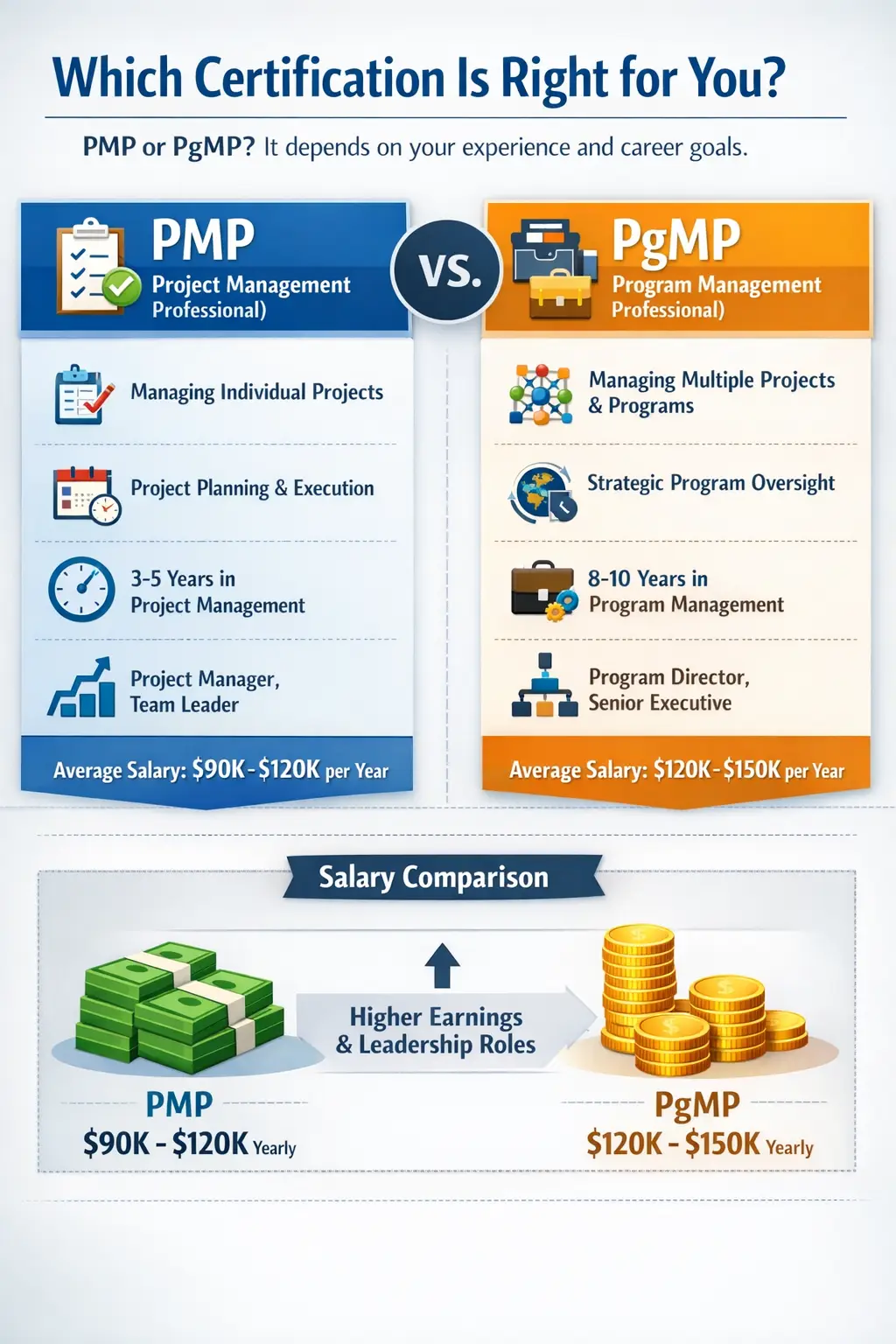
- PMP is perfect for professionals who are actively managing individual projects. If you have 3-5 years of experience in project management and are responsible for leading and executing projects, then PMP is the certification designed for you.
PMP is all about gaining technical knowledge, refining your ability to plan, schedule, execute, and deliver projects within a set timeframe and budget.
- PgMP, on the other hand, is more suitable for seasoned professionals with 8+ years of experience in managing large-scale projects or overseeing multiple interconnected projects.
PgMP holders are usually in leadership roles, managing programs that involve multiple projects with significant organizational impact. If you’re already leading programs or planning to transition into a strategic leadership role, PgMP is the certification that will enhance your career.
2. Focus and Role: Tactical vs. Strategic
One of the primary differences between PMP and PgMP is the focus and role each certification emphasizes.
- PMP professionals are usually involved in managing individual projects from start to finish. You are the person who takes a project, defines its scope, schedules its timeline, manages resources, mitigates risks, and ensures the project is completed within its constraints.
You are deeply involved in the tactical side of project management. In essence, PMP focuses on ensuring the success of a single project.
- PgMP, however, focuses on the strategic aspect of project management. You will be managing multiple projects that are all aligned with a higher-level organizational objective. The projects within a program are interconnected, and as a PgMP, your responsibility is to ensure that these projects are integrated seamlessly, meet broader organizational goals, and deliver long-term value to the company. This requires a high-level perspective, leadership abilities, and an understanding of how multiple projects can contribute to a larger, more significant program.
If your role is focused on managing one project at a time, then PMP is the best certification. But if you are or aspire to be in a role that oversees a set of projects working toward a common organizational goal, then PgMP is the right choice.
3. Experience Level: Where Are You Now?
Experience plays a crucial role in deciding between PMP certification vs PgMP.
- PMP: If you have 3-5 years of project management experience, PMP is designed for you. At this stage, you are likely managing individual projects, coordinating teams, and responsible for delivering a project’s specific outcomes.
PMP will help formalize your skills and broaden your understanding of project management methodologies, making you a recognized professional in the field.
- PgMP: On the other hand, PgMP requires 8+ years of program management experience. This is a certification for individuals who have a broader scope of responsibility, including leading and managing several projects within a program.
PgMP holders are typically senior professionals who manage high-level programs that drive organizational growth. If you are already in a position where you manage a portfolio of projects or are looking to transition into a more strategic and leadership-focused role, then PgMP is a clear choice.
It’s also worth noting that PgMP requires experience managing programs that span several years and impact various departments, which is why it is ideal for senior managers or those in the executive team.
4. Key Skills and Career Path: What Are You Preparing For?
When deciding between PgMP certification vs PMP, consider what key skills you need for the role you’re preparing for and the career path you aim to follow.
- PMP focuses on skills like:
-
Project Planning & Execution:
Learning how to create project plans, schedules, and budgets that keep projects on track.
-
Risk Management:
Understanding and managing risks, ensuring that the project stays within scope and is delivered successfully.
-
Team Leadership:
Managing teams, ensuring effective collaboration, and achieving project goals.
-
Resource Allocation:
Learning how to manage project resources efficiently, keeping the project within its budget and timelines.
After achieving PMP, you typically move into roles like Project Manager, Team Leader, or Project Coordinator. These roles allow you to continue managing individual projects or move into more senior project management positions.
PgMP, on the other hand, develops strategic leadership skills such as:
-
Program Integration & Coordination:
Ensuring that all projects within a program align with organizational strategies and objectives.
-
Cross-Functional Leadership:
Leading various teams across different projects and ensuring that everyone is working toward a shared goal.
-
Stakeholder Management:
Managing relationships with senior executives, stakeholders, and clients at a program level.
-
Strategic Oversight:
Understanding how to drive programs that align with business strategies and managing risks at a program level.
After earning PgMP, you’re likely to move into roles like Program Manager, Program Director, or Executive Leader. These positions typically involve overseeing multiple projects and aligning them with the broader goals of the organization. In larger companies, PgMP holders are also often promoted to Senior Executive or Chief Program Officer roles.
5. Salary Comparison: PMP vs PgMP
One of the key factors in making the decision between PMP vs PgMP is the potential salary. Generally speaking, PgMP holders earn more than PMP holders due to the higher level of responsibility associated with managing multiple projects or large-scale programs.
-
PMP Salary:
As a PMP, you can expect to earn an average annual salary between $90,000 and $120,000. Of course, this figure varies depending on the country, industry, and the size of the organization, but PMP holders typically earn salaries in the range of $90,000 to $120,000 per year. The more experience and expertise you gain, the higher your earning potential will be.
-
PgMP Salary:
For PgMP holders, the earning potential is higher. You can expect an average salary range of $120,000 to $150,000 annually. Given that PgMP is an advanced certification that requires extensive experience and a strategic mindset.
Employers tend to offer higher compensation packages for professionals who are responsible for overseeing complex programs. In senior leadership roles, this figure can go even higher, particularly in industries such as IT, engineering, and construction.
To summarize, PMP is a great certification for project managers who are just starting out and managing individual projects, while PgMP offers higher earning potential for professionals managing complex programs with significant organizational impact.
Preparing for the PMP and PgMP Exams
PMP Exam Preparation Tips
- Study Resources:
Use the PMBOK (Project Management Body of Knowledge) guide, online training courses, and follow a structured study plan.
- Mock Exams:
Practice with realistic PMP test questions to familiarize yourself with the exam format. Study with free scenario-based questions and answers that focus on domain 1 (people), domain 2 (process), and domain 3 (business environment) separately. This way you can study and strengthen your concepts in the context of a specific domain, instead of just cramming questions and answers.
- Study Groups: Join PMP study groups or online forums to discuss key concepts.
PgMP Exam Preparation Tips
- Study Resources: Invest in PgMP-specific study guides and courses that focus on program management principles.
- Case Studies: Since the PgMP exam includes case studies, practice applying program management strategies to real-life scenarios.
- Strategic Focus: Focus on understanding how to align programs with business goals and manage large-scale risks.
Besides PgMP and PMP, there are other paths, such as CAPM for foundational knowledge, Six Sigma for process improvement, or an MBA for broader business and leadership skills, which can also complement your professional growth.
Regardless of the route you choose, these certifications offer significant career benefits, expanding your opportunities in the rapidly growing field of project management. The key is to select the one that aligns with your current role and long-term goals, and with proper preparation, any of these options can help you take your career to the next level.
Conclusion
When evaluating PgMP vs PMP, it’s clear that both certifications are valuable, but they cater to different levels of experience and career goals in project management. If you’re just starting out in project management or managing individual projects, PMP is the right choice. However, if you have significant experience managing multiple projects and want to take on higher-level leadership roles, PgMP will offer the strategic expertise needed to move forward in your career.
No matter which certification you choose, both PgMP and PMP provide substantial career benefits and increase your opportunities in the fast-growing field of project management. The key is to choose the one that aligns with your current role and future goals. With the right preparation, you can achieve either certification and take your career to the next level.